Wellhead pressure control
Annular and tubing backpressure-control hardware: actuators, pressure and other relevant sensors, local controller, communications equipment, fail-safe components and installation materials.

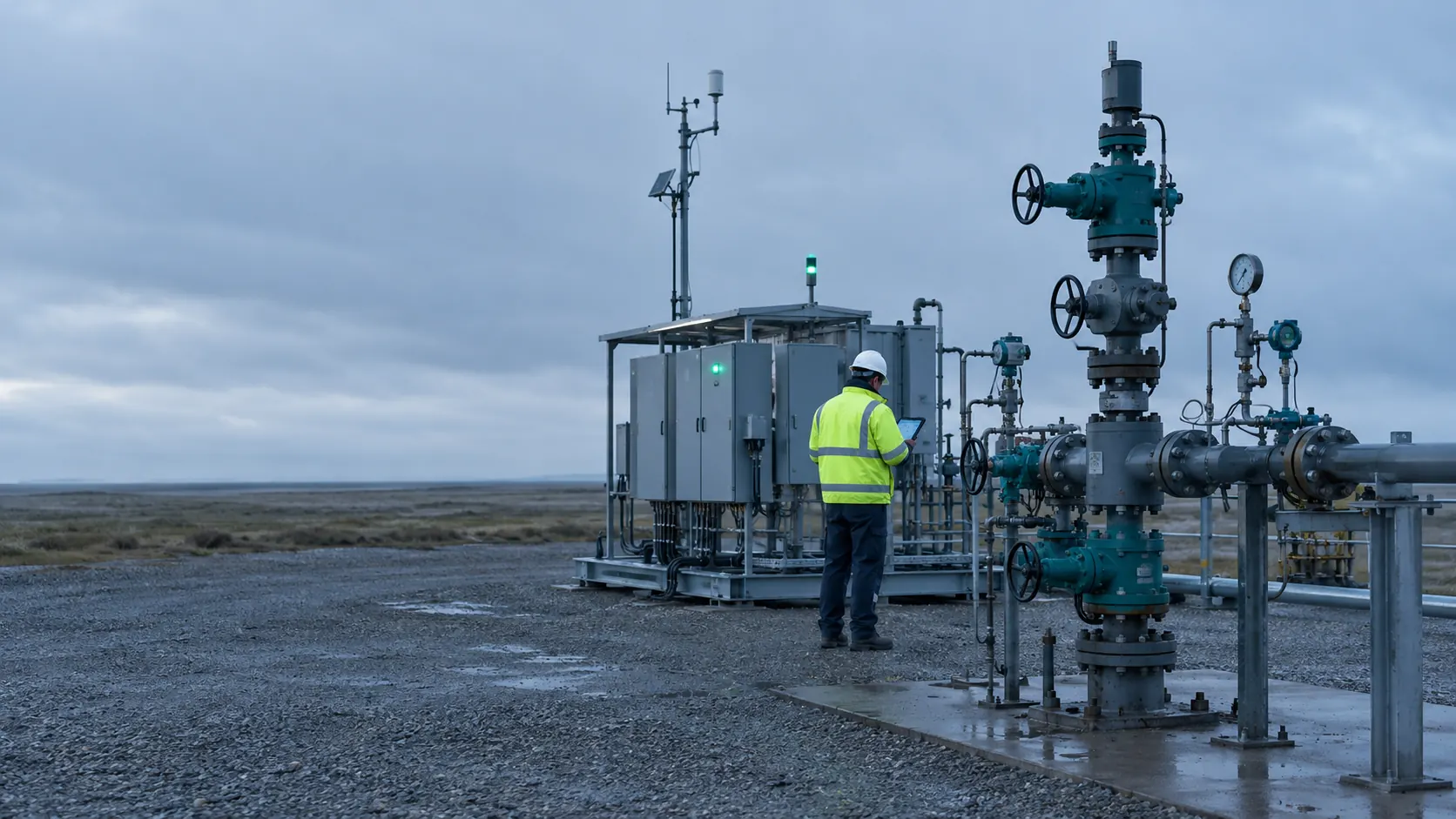
Ecominas Corp. develops systems, software and technology solutions that integrate AI and automation to maximise operating efficiency and safety across the hydrocarbon industry.
Ecominas Corp. develops oilfield production-optimization systems that combine wellhead pressure-control equipment, field sensing, edge controls and applied analytics.
SIP-3 is the physical configuration: annular and tubing backpressure control at the wellhead, with actuators, pressure sensing, a local controller and fail-safe components. SIP-AI is the analytics and control layer that evaluates operating data and recommends or executes approved pressure adjustments within defined limits.
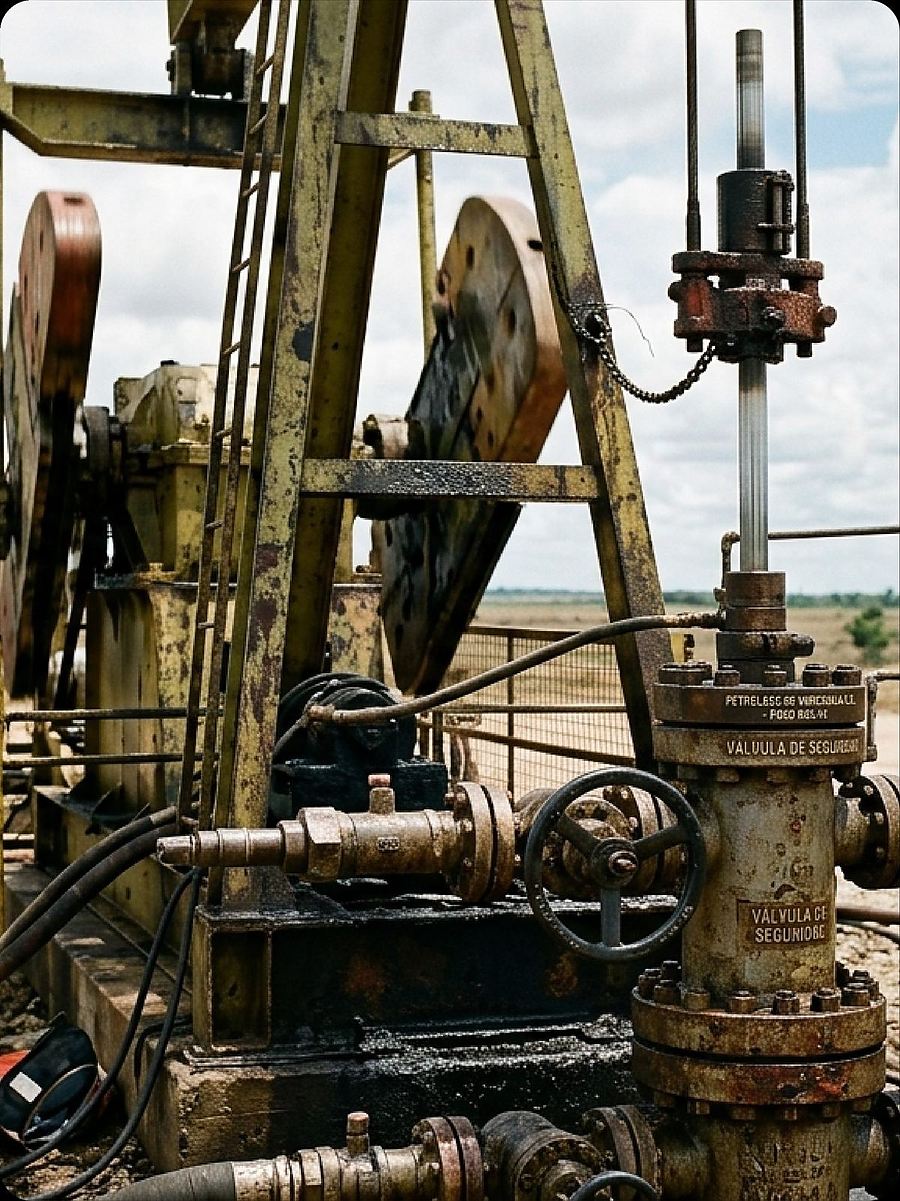 Wellhead installation · company source material
The portfolio spans the physical equipment at the wellhead, the analytics that interpret it, the people who supervise it and the evidence that proves it.
Annular and tubing backpressure-control hardware: actuators, pressure and other relevant sensors, local controller, communications equipment, fail-safe components and installation materials.
SIP-AI evaluates operating data and recommends or executes approved pressure adjustments within defined limits, with model configuration, monitoring, alerts, reporting and an audit log.
Human oversight, exception handling, operator reporting and approved model or configuration changes, under a managed-operations fee and a service-level agreement.
Pressure, temperature, flow and equipment-state sensing feeding a local controller and a secure communications path, so that every conclusion traces back to a measured input.
A documented industrial-control cybersecurity program covering segmentation, secure remote access, least privilege, encrypted communications, logging, backup, recovery and incident response.
A fixed-scope field evaluation on qualified wells with pre-agreed evidence and safety gates: baseline study, installation, controlled test, final technical and economic report.
Increased annular pressure keeps gas in solution as it moves from reservoir to pump, raising the mobility of the oil and reducing gasification inside the pump.
Every step is a gate. Nothing is adjusted until the baseline, sensor quality, fail-safe response, operating envelope and responsible operator are approved.
Field equipment is connected to the well. Over the first seven days the sensors collect real-time data on pressure, temperature and gas flow rate, including fluctuations from eruptions, pump shutdowns, gas-lock issues and PID activations.
The annular valve begins pressurization under AI control. The model dynamically adjusts the valve and retains both the repetitive patterns and the fluctuations in key well variables as it works to stabilize the well and the pump.
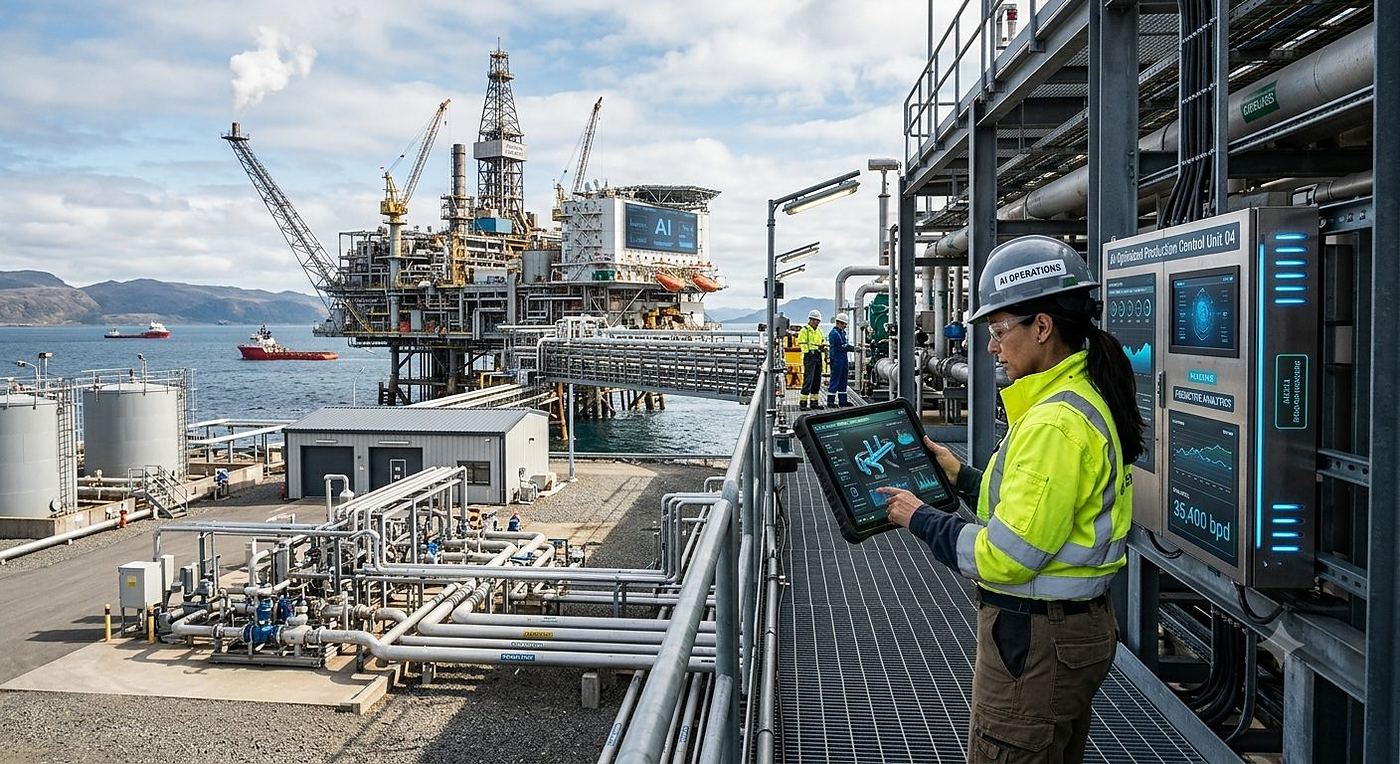
 Connected field operations
Venezuela combines a very large hydrocarbon resource base with a producing system that has experienced prolonged operational and investment constraints. OPEC’s 2026 Annual Statistical Bulletin reports 303.70 billion barrels of proved crude reserves at the end of 2025.
That context can create demand for production optimization, reliability improvement and selective rehabilitation. It also creates material legal, political, infrastructure, procurement, payment, data and counterparty risk. The opportunity is therefore defined well by well, through an engineering screen, a compliance screen and a test of operational accessibility.
Start with a diagnostic assessment: data review, field survey, well qualification, baseline design and a value hypothesis. A fixed fee, credited against a pilot where appropriate.